
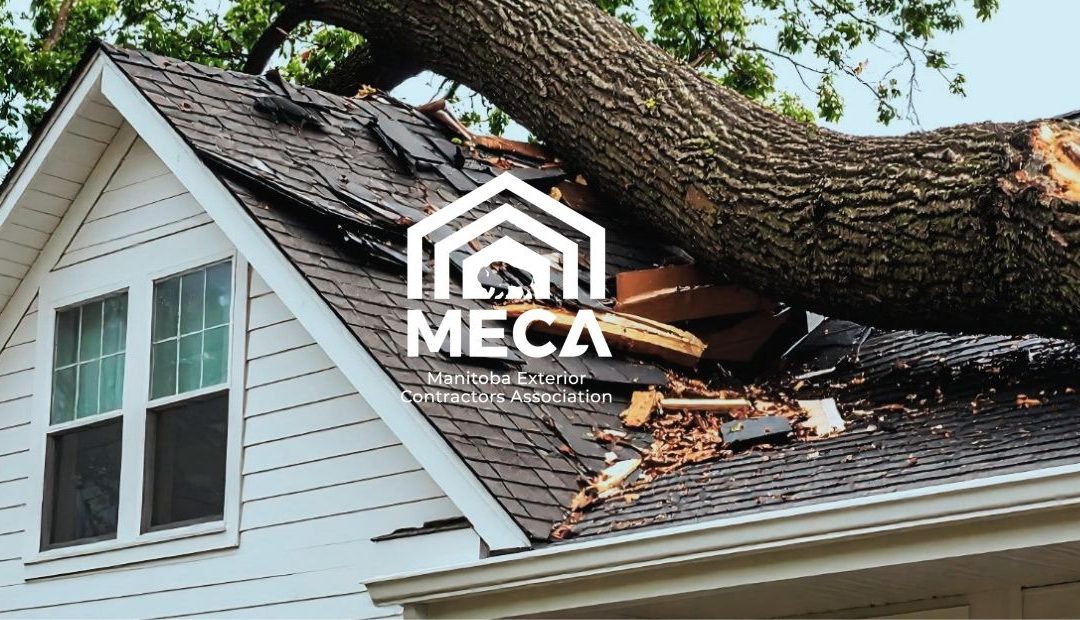
Manitoba has had a rough run of storms this year. Hail, wind, heavy rain, even tornados — the kind of events that leave neighbourhoods looking like a war zone and homeowners scrambling to get their roofs dealt with before winter. For contractors in this trade, a storm season like this one is complicated. There’s more work than anyone can handle, and that creates its own set of problems.
This article isn’t about pointing fingers. The challenges that come with a disrupted market aren’t the result of bad people making bad decisions. They’re the predictable outcome of a system that isn’t built to absorb a sudden surge in demand. Understanding that is the first step toward doing something about it.
More Work Than the Market Can Handle
When several major storms move through a region, it doesn’t just create a spike in demand — it creates a vacuum. There has been so much roofing and siding damage that it will take years to get through it all. Initially just handling the emergency calls is a huge task, doing temporary repairs, assessing what needs to be done to repair the damage. The amount of replacement work piles up to an amount that far surpasses what the industry can handle.
Legitimate, established contractors get booked out fast. Lead times stretch. Homeowners get anxious. And into that gap, predictably, steps everyone who owns a ladder and a nail gun.
This isn’t unique to Manitoba. It happens everywhere storms hit. All sorts of people step in to help fill the gap; contractors from other provinces chasing the work, general contractors expanding into roofing, small handymen operators taking on more than they’re equipped to handle, and even people with a little skill and have some extra time on their hands might start a side hustle to make some extra money on the weekend. None of these people are bad actors. They’re people responding rationally to an economic signal. There is work. They want work. That’s not hard to understand.
The motivation isn’t the problem, the lack of skill is.
The Challenges That Follow
When a market gets flooded with too much opportunity, a few things tend to happen consistently.
Quality suffers. Roofing and siding is not easy. Installing a quality job takes training and experience, especially in Manitoba where the climate is so unforgiving — freeze-thaw cycles, ice damming, extreme temperature swings — and a job that isn’t installed to the right standard won’t last. Inexperienced installers end up making a ton of mistakes, even though they are trying their best.
Workers get stretched thin. Established contractors who are trying to meet the surge often push their crews harder and longer than is ideal. Fatigue on a roof is a safety issue, not just a productivity issue.
Out-of-market contractors don’t always know local conditions. A contractor from another province may do excellent work at home, but they don’t have their best people here and often struggle in a myriad of ways. Running a stable business is hard enough, setting up shop in a new market in a hurry is not a recipe for success. Often these companies short cuts and warranty claims are left behind after they depart for home.
Handymen and general contractors stepping in face a steep learning curve. Most of them are capable people, but roofing and siding is a skill that takes time to learn. This foray into a new opportunity usually ends up reminding them of why they didn’t consider this type of work for their business in the first place. And they leave issues in their wake that often become a threat to their core business.
Here today, but gone tomorrow. When the storm rush is over and out-of-market contractors have moved on, the local industry is left to deal with the fallout. Established Manitoba contractors spend years cleaning up work they didn’t do — it is one reason why the industry suffers from such a bad reputation.
No One Is Doing Anything Wrong — But the System Is Failing
This is the part worth sitting with. In a disrupted market, most of the people contributing to these problems are acting in good faith. The homeowner is desperate to get their roof done before it rains again. The out-of-province contractor is following the work. The handyman is trying to build his business. The local contractor is trying to keep up.
Nobody is the villain. But the system — the one that should be ensuring minimum standards, verifiable credentials, and clear accountability — isn’t keeping pace. When the system doesn’t hold, it’s always the homeowner who pays the price first, and the industry that pays it second.
This is not a problem any individual contractor can solve on their own. It’s a systemic issue, and it requires a systemic response. This is the role of healthy regulation in a market. This is where government and insurance companies are supposed to be protecting homeowners from problems.
The Long-Term Answer: Healthy Regulation
Storm seasons expose a fundamental weakness in our industry: we don’t have enough qualified, experienced tradespeople to meet extraordinary demand. That’s not a criticism — it’s a reality. The challenge with this particular industry is that there is often so much urgency to get the work done. But the fact remains that the work should only be getting done by professionals. It certainly would take a long time for the damage from a storm to get repaired, but that is better than what occurs now where most of the work is done below standard and then homeowners are left with issues. The regulators need to insist on training and education standards for the industry, just like they have done with so many other skilled trades.
It is important to notice that this cycle is more damaging to our industry than we may have previously recognized. It is a key driver in so many of the negative issues that we face. Every time a big storm happens it invigorates the bottom of the market and floods the market with issues and poor-quality installations.
Apprenticeship and training. The exteriors industry in Manitoba has been working for decades to bring about improvements in training, working conditions, safety, and worker retention. The industry has limited resources and power to affect these changes on their own. This is the role of government regulation. They alone have the ability to expedite an industry toward this type of change. Without it we will continue this cycle every time the market is disrupted by a storm surge.
MECA’s plan for industry stability involves working with regulators to create the right environment for success. It starts with ensuring businesses have all of the basics in terms of legal operations; a gst #, liability insurance, workers compensation and working at heights training. Currently every MECA member is vetted for these criteria. This helps to create a minimum standard for operating a business in this sector. The next stage includes installer education and certification, which becomes a license to do the work. Once that is established it needs to be enforced by the regulators that only those with the proper certifications are allowed to do the work. This is not a simple thing, but it has already been done in so many other trades. If it has worked for them then it seems to be the obvious solution for us also.
Certification doesn’t solve everything overnight. But it draws a line. It gives the market a signal it currently doesn’t have: this person has been trained, assessed, and recognized as qualified to do this work in this province. Insurance companies should only be hiring companies that meet this standard, and homeowners as well. The whole industry improves if this was a reality.
MECA exists to bring about this reality in Manitoba. If you want to be part of the conversation about where this industry goes from here, we’d love to have you in the room. Contact MECA today.
– David Ehlers, MECA Executive Director